

Paper
While there are notable demographic, economic, and geographic divides over AI, there is also substantial alignment between Republicans and Democrats.
- +2
Ian Klaus, Mark Baldassare, Rachel George, …
{
  "authors": [
    "Mark Baldassare",
    "Ian Klaus"
  ],
  "type": "commentary",
  "centerAffiliationAll": "dc",
  "centers": [
    "Carnegie Endowment for International Peace"
  ],
  "englishNewsletterAll": "ctw",
  "nonEnglishNewsletterAll": "",
  "programAffiliation": "CC",
  "programs": [
    "Carnegie California"
  ],
  "regions": [
    "United States"
  ],
  "topics": [
    "Domestic Politics",
    "Economy",
    "Subnational Affairs"
  ]
}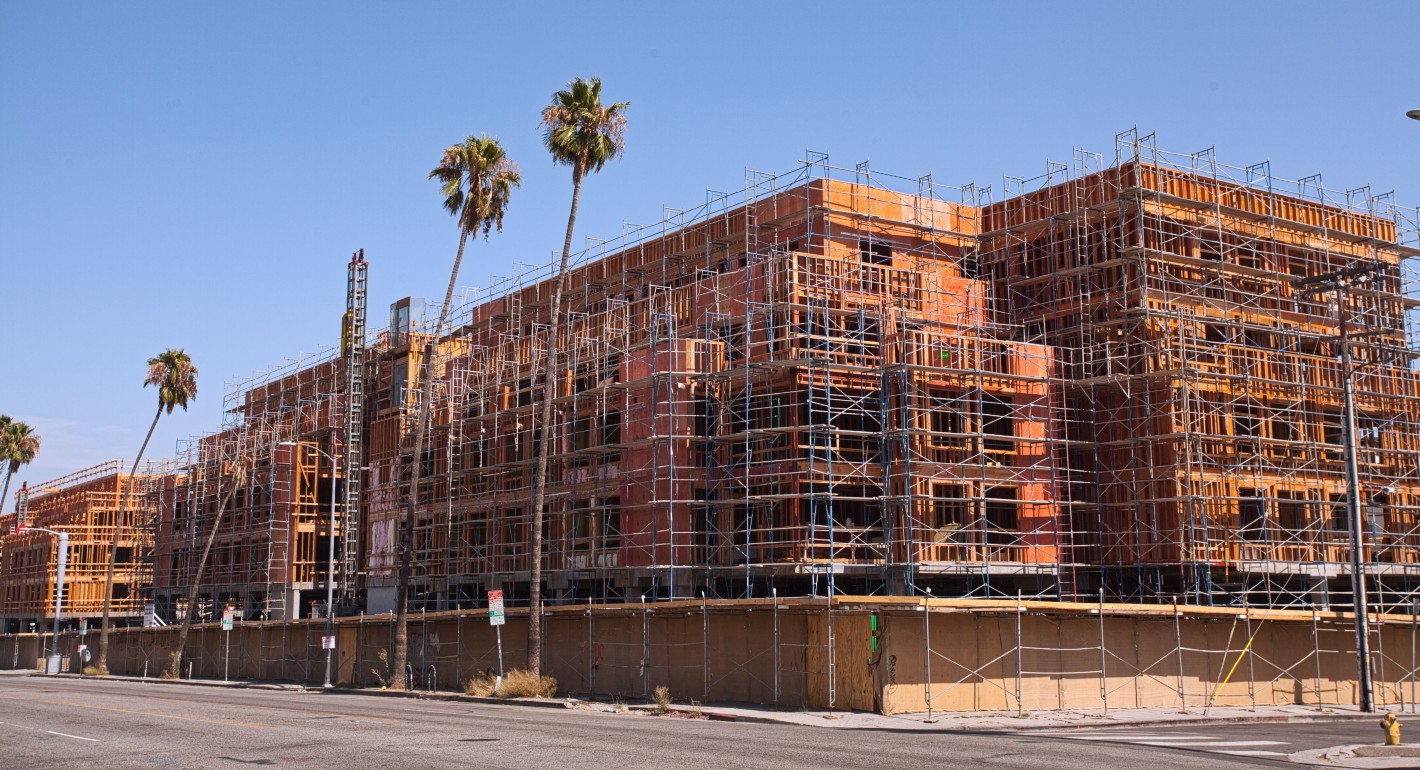
Photo by Wirestock/iStock
Direct democracy is the political wildcard in the state’s midterm election.
California is widely expected to live up to its blue-state reputation in the November election for governor and other statewide races. Recent polling shows that Democrats hold a twenty-point advantage in partisan voter registration, and no Republican has won a statewide race since 2006.
But plenty of important, open issues still will be decided by voters this fall. Further down on the ballot—where choosing between a Democratic or Republican candidate is replaced by a “Yes” or “No” vote—fourteen state propositions’ outcomes will provide insight into how voters think about affordability, federal uncertainty, and election reforms in advance of the next presidential election.
This year’s mix of nine citizens’ initiatives supported by a variety of interest groups and five legislative measures is the most on the state ballot since 2016 and represents the latest and arguably the biggest test for California’s direct democracy system. We know California voters like being able to make policy decisions at the ballot box, but the number and complexity of state propositions can be overwhelming. And despite the state’s reputation for governmental intervention, the historical default is for Californians to vote no if they have doubts about the policy outcomes.
With that context in mind, we’ve grouped thematically the key propositions that will provide insight into California—and national politics—looking forward.
When asked in recent polling to name the most important issue facing the people of California today, Californians chose affordability and the cost of living, followed by housing costs and availability. Many voters expressed concerns about their own financial situations and housing costs in their regions. Our recent Carnegie California survey shows that a majority of Californians worry that AI—including the IPOs of OpenAI and Anthropic later this year—will worsen inequality. Majorities also prefer to have lower taxes and raise state taxes on wealthy Californians to pay for state programs today. This explains the context for half of the California ballot items this fall.
The affordability measure with the highest profile on the November ballot is Proposition 40. This is a labor union–sponsored initiative that would impose a one-time tax of up to 5 percent on individuals’ assets of over $1 billion to pay for healthcare, food assistance, and education-related programs. This initiative spawned two business-sponsored initiatives (Propositions 41 and 42) that are specifically designed to counter the legality and implementation of the billionaire tax if it passes. Proposition 3 is another labor union–sponsored initiative that would make permanent a temporary tax on high incomes to fund schools and healthcare that voters passed in 2012 with an end date of 2018 and that voters passed again in 2016 with an end date of 2030. Early polling finds that majorities of likely voters would vote yes (54 percent) on the billionaire tax and yes (62 percent) on permanently extending the tax on high incomes.
Turning to housing affordability, Proposition 1 is the $11.250 billion state bond measure placed on the ballot by the legislature to finance programs to fund affordable rental housing and homeownership programs. Proposition 37 is a citizens’ initiative sponsored by real estate interests and labor unions that would authorize up to $25 billion in bonds for middle-income buyers of qualified new homes to be paid by homeowners’ mortgage payments. These massive state bonds share the November ballot with the business-sponsored Proposition 45 that would amend the California Environmental Quality Act (CEQA) to expedite environmental review of certain projects, including most housing. Early polling finds that about half or more of the likely voters would vote yes on a multibillion-dollar state housing bond (49 percent) and the middle-class loan program (53 percent), while overwhelming majorities would vote yes (73 percent) on the CEQA reform to speed up housing reviews. This adds up to the most ambitious collection of housing propositions in recent memory.
A host of executive orders and the One Big Beautiful Bill that Congress passed in 2025 have resulted in uncertainty about federal funding for state government programs. California’s health programs and research grants are especially vulnerable to federal cuts. This puts the state and its voters in a very tough place. Majorities of likely voters in recent polling say they want the California government to backfill the loss of federal funding, but they are not willing to pay higher taxes. How will Californians balance these often-competing viewpoints? Several proposals for dealing with federal uncertainty will appear on the November ballot.
Proposition 2 is a legislative measure that would increase the share of state tax revenues collected each year that could be set aside for future use from 10 percent to 20 percent. This rainy-day-fund increase aims to prepare for budget gaps from federal cuts and revenue decreases. Recent polling finds that likely voters (70 percent) are in favor of raising the cap. Proposition 38 is a citizens’ initiative sponsored by philanthropists and medical associations that would authorize a $8.4 billion state bond for immunology and immunotherapy research. Proposition 44 is a labor union–sponsored initiative that would require community health clinics to spend 90 percent of revenues on services. Together, these propositions would backfill federal funding gaps in ways that appear consistent with the priorities of Californians more generally, but they would be costly.
When asked in recent polling to name the most important problem facing the nation today, Californians chose threats to democracy and political extremism. Most California voters are not satisfied with the way democracy in the United States is working, and many express concerns about voting and elections in the state. Californians’ views about elections have also been influenced by recent voting experiences, such as the 2021 governor’s recall, when voters were asked to keep or remove their governor and choose a replacement on the same ballot. In this context, proposals for changes to state and local elections are on the ballot in November.
Proposition 4 is a legislative measure that would allow state and local governments to create programs for state and local candidates to receive public funds within certain limits. It would amend the 1974 state law passed by voters that prohibits the use of public funds for campaigning. Proposition 5 is also a legislative measure that would change the governor’s recall election to a single vote for removing or keeping the current officeholder. Proposition 39 is a citizens’ initiative that was sponsored by two GOP legislators that would establish additional voter identification and citizenship verification requirements. Proposition 43 is a legislative measure that would require a two-thirds majority rather than a simple majority vote to pass a special local tax.
We don’t have any recent polling on public financing of state and local campaigns or changes in the governor’s recall election. About half of likely voters (49 percent) say they would vote yes on the voter identification requirements, while fewer (39 percent) would vote yes on the local tax limitations, with partisans deeply divided on these two measures. It’s noteworthy that Proposition 43 was part of a legislative compromise resulting in proponents withdrawing their citizens’ initiative for local tax limits.
California voters were spared from a twenty-one-measure state ballot when seven citizens’ initiatives were withdrawn by proponents or failed to gather the required number of signatures. In a year when affordability has an outsized role on the ballot, advocates of minimum-wage increases and local rent controls took a pass in the wake of their citizens’ initiatives being rejected in November 2024.
It’s also noteworthy that the issue of artificial intelligence regulation is not on the ballot, as child AI safety advocates and OpenAI agreed to work together rather than submitting dueling initiatives. Meanwhile, citizen input on AI is being gathered by Engaged California that could inform future legislative measures. Our recent Carnegie California Survey shows that Californians considered AI policy important when voting in the gubernatorial primary, but the essential questions around the impacts of the emerging technology have yet to work their way through the established direct democracy system.
California voters face a daunting November ballot, with choices on fourteen state propositions. They will be subject to a tidal wave of television commercials, social media posts, and mail from those campaigns. In their search for trusted information, the State Voter Information Guide will be the go-to source.
California and about half of other states have initiatives and referendums, and most state legislatures can ask voters to make and change policies. Voters’ experiences with their state’s direct democracy will have a role in their views about how well U.S. democracy is working in this consequential midterm. We will report back on the California ballot outcomes after the November election.

Nonresident Scholar, Carnegie California
Mark Baldassare is a nonresident scholar at Carnegie California. He is an authority on elections, voter behavior, and political and fiscal reform.

Founding Director, Carnegie California
Ian Klaus is the founding director of Carnegie California. He is a leading scholar on the nexus of urbanization, geopolitics, and global challenges, with extensive experience as a practitioner of subnational diplomacy.
Carnegie does not take institutional positions on public policy issues; the views represented herein are those of the author(s) and do not necessarily reflect the views of Carnegie, its staff, or its trustees.

While there are notable demographic, economic, and geographic divides over AI, there is also substantial alignment between Republicans and Democrats.

Ian Klaus, Mark Baldassare, Rachel George, …

An overwhelming victory by a far-right-wing party in a small state in eastern Germany will have major repercussions for Chancellor Friedrich Merz’s coalition.

Judy Dempsey

As India undergoes a demographic transition, its cities will be its economic powerhouse—but only if it accurately captures city growth and empowers cities to support their citizens.

Apoorva Jadhav
Examples from Virginia and Lake Tahoe reveal complex situations that governments could use to fund critical grid upgrades.
Kate Gordon, Noah Gordon

Cities across the United States facilitate investment in American communities. Yet, because global attention remains focused on U.S. trade policy, their distinctive and bold local approaches to international trade and investment promotion are often underappreciated.
Wyatt Frank, Marissa Jordan