

Commentary
Ruslan Suleymanov
{
  "authors": [
    "Ruslan Suleymanov"
  ],
  "type": "commentary",
  "blog": "Carnegie Politika",
  "centerAffiliationAll": "",
  "centers": [
    "Carnegie Endowment for International Peace",
    "Carnegie Russia Eurasia Center"
  ],
  "englishNewsletterAll": "",
  "nonEnglishNewsletterAll": "",
  "primaryCenter": "Carnegie Russia Eurasia Center",
  "programAffiliation": "",
  "regions": [
    "Middle East",
    "Yemen",
    "Russia"
  ],
  "topics": [
    "Arms Control",
    "Security",
    "Global Governance",
    "Foreign Policy"
  ]
}
Source: Getty
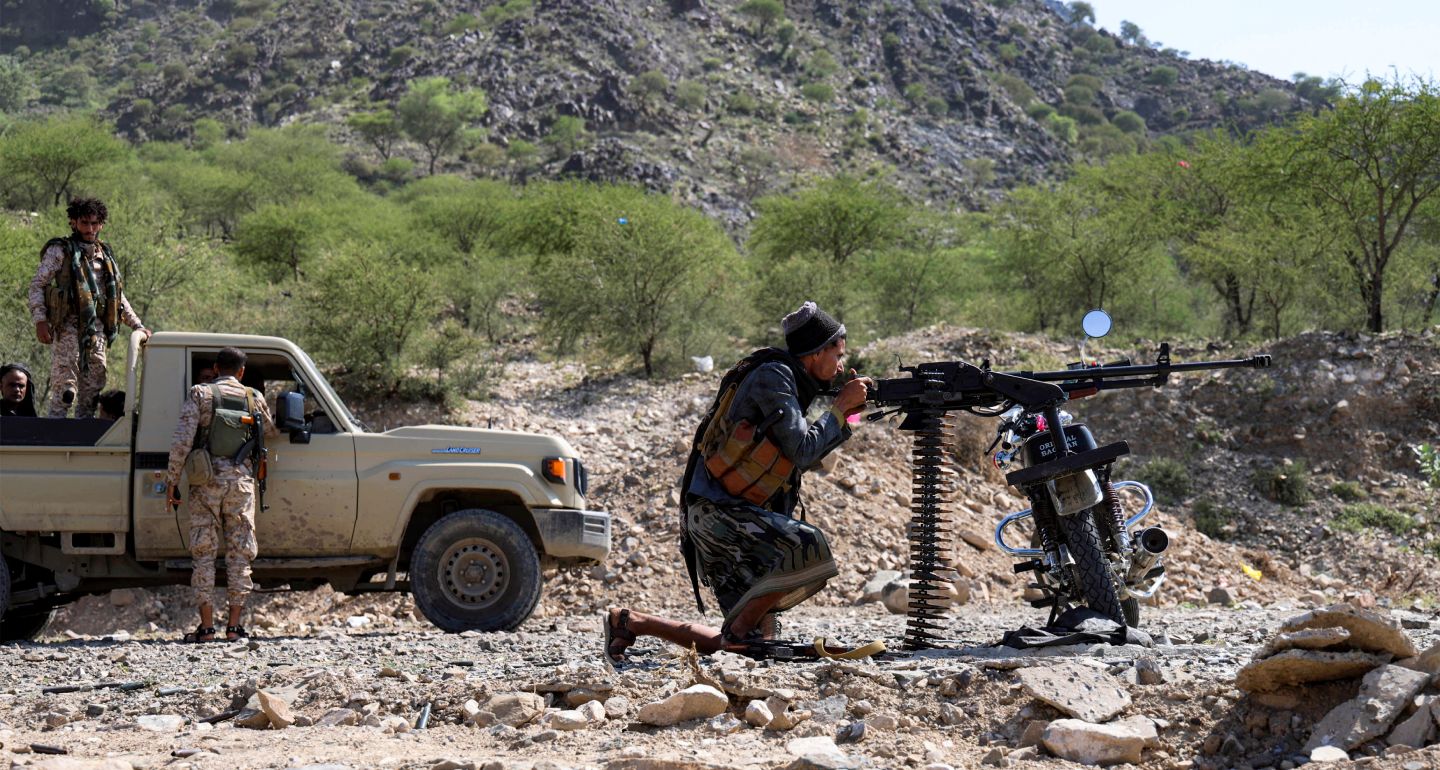
Russia officially endorses Yemen’s formal government while quietly providing military support to the Houthi rebels. However, recent escalation in Yemen has thrust Russia’s game into the spotlight—and risks endangering its relations with the Gulf states.
The situation in Yemen has long been volatile, but recent months have seen unprecedented escalation. The country’s Houthi rebels, backed by Iran, have progressed from firing missiles at Israel and ships in the Red Sea to a large-scale offensive against regions controlled by Yemen’s government, quickly advancing along the coast toward the Bab al-Mandab Strait. They are also shelling civilian and oil infrastructure in neighboring Saudi Arabia, one of the Yemeni government’s biggest backers—with strikes on the Saudi capital Riyadh’s airport this October resulting in the deaths of thirteen people.
The latest Middle East flare-up poses a serious challenge for Russia’s policy in the region. On the one hand, Moscow recognizes Yemen’s formal government as the sole authority in the country so as not to spoil relations with the Gulf monarchies. On the other hand, the Kremlin maintains close ties—including militarily—with the Houthis and benefits considerably from their cooperation. The Kremlin cannot play both sides forever, though: The longer tension persists in Yemen, the riskier its balancing act will get.
As a permanent member of the UN Security Council, Russia supports all initiatives aimed at a political settlement in Yemen. At a meeting with his Yemeni counterpart in August 2024, Russian Foreign Minister Sergey Lavrov underscored that Moscow affirms the need to put the situation in Yemen “back on political and diplomatic track.”
That did not, however, prevent Moscow from forging ties with the Houthis, and insisting that dialogue with the group was important. Moreover, the actual scope of Russia’s cooperation with the Houthis extends well beyond periodic meetings between Russian diplomats and the rebels’ representatives.
When the Houthis paralyzed shipping in the Red Sea in 2023–24 to protest against Israel’s actions in Gaza, it emerged that military advisers from the GRU, Russia’s military intelligence agency, were stationed in Yemen’s capital Sana’a, which the rebels have controlled since September 2014. Furthermore, Moscow provided the Houthis with satellite data to carry out strikes against commercial vessels in the Red Sea.
Reports by UN Security Council experts also indicate that the Houthis receive weapons with markings identical to those found on weapons manufactured in Russia, including Kalashnikov assault rifles (AKSU), Dragunov sniper rifles (SVD-1), Makarov pistols (Baikal 442) and Tyulpan scopes (1P29).
Lastly, Moscow has at minimum discussed the potential provision of anti-vessel Yakhont missiles with the Houthis. Iran mediated the consultations. Negotiating on Russia’s behalf was Viktor Bout, who was previously sentenced in the United States to twenty-five years in prison for illegal arms trafficking but was freed as part of prisoner swap in 2022.
The Kremlin derives considerable benefits from supporting the rebels in Yemen. Back in early February 2022, the Houthis came out in support of Russia’s war against Ukraine, declaring that they recognized the independence of the self-proclaimed Donetsk and Luhansk people’s republics. They are also helping Moscow recruit Yemeni citizens to fight in Ukraine.
In the Houthis, Russia has also gained an ally capable of sowing panic in global trade—as they did in late 2023, when rebel sabotage quadrupled the cost of maritime shipping between Europe and Asia. To this day, most shipping companies prefer to bypass the Red Sea, through which around 12 percent of all international maritime traffic used to pass.
The Houthis’ current offensive, together with attacks on Saudi Arabia’s civilian and oil infrastructure, are exacerbating disruptions in energy supplies and helping to keep global oil prices above $100 per barrel. In addition, the overall instability in the Middle East is forcing the United States to devote more financial, diplomatic, and military resources to the region, diverting attention away from Ukraine.
As a result, even limited support for the Yemeni rebels effectively allows Russia to open another front in its conflict with the West. The Kremlin’s main message is simple: As long as you continue to arm Ukraine, we will support Tehran and the Houthis.
Unfortunately for the Kremlin, the game only gets harder from here. Russia faces increasing difficulty navigating the complexities of the conflict in Yemen—especially given the active involvement of external powers. Saudi Arabia openly backs the official government, Iran backs the Houthis, and the current escalation has become part of a broader confrontation between Iran and the United States and its allies.
Since the creation of the Mecca Pact between Pakistan, Saudi Arabia, and Türkiye in August, Ankara has been supplying Riyadh with weapons, including drones, while Islamabad has sent the Saudis at least 8,000 soldiers and military equipment. In addition, the U.K., France and Italy are all providing limited military assistance to Saudi Arabia.
After cooperating with the Houthis for years, Russia now risks finding itself on the opposite side of the conflict. Its support for the rebels was less conspicuous in previous, quieter years, but now, amid escalation and their successes, Moscow will have a harder time distancing itself from them.
According to Al Jazeera and AP, the Russian government enabled the Houthis’ current offensive by providing geospatial (GEOINT) and signals intelligence (SIGINT) data. These were combined with the operational capabilities of Iran, which is coordinating the rebels’ actions on the ground.
To mollify the Saudis and their allies somewhat, the Russian Foreign Ministry has diligently emphasized that Moscow recognizes Yemen’s Presidential Leadership Council as the sole legitimate authority in the country. In late September, Russian President Vladimir Putin spoke by telephone to Saudi Crown Prince Mohammed bin Salman to discuss ways to resolve the conflict in Yemen.
It is easy to see why Moscow wants to reassure Riyadh: Saudi Arabia is Russia’s key partner in setting oil production quotas and regulating oil prices. Good relations between the two prevented Saudi Arabia from caving to U.S. pressure in 2022 and increasing oil production, a move that would have led to a drop in global prices—and consequently, in Russia’s revenue.
Now Riyadh increasingly insists that Moscow halt its military support for the Houthis. For its part, the Kremlin has stated only that the “situation is extremely troubling” and that it is “monitoring developments with concern.”
Russia is stuck between a rock and a hard place. If it continues to support the Houthis, it could find itself in another protracted conflict—one that will strain its relations with Saudi Arabia and the other Gulf states. But if Russia abruptly cuts off aid to the rebels at a critical moment, it will lose both their favor and Iran’s, along with all the leverage they have given it. The further the situation in Yemen escalates, however, the harder the Kremlin’s balancing act will become.

Non-resident research fellow, the Institute for Development and Diplomacy (Azerbaijan)
Recent Work
Ruslan Suleymanov
Ruslan Suleymanov
Carnegie does not take institutional positions on public policy issues; the views represented herein are those of the author(s) and do not necessarily reflect the views of Carnegie, its staff, or its trustees.
The concrete goal of an end to the hostilities in Ukraine has been replaced by a host of vague Russian demands concerning a range of issues and regions.
Alexander Baunov
It’s a testing time for Russia’s policy in Serbia and the wider region, but it would be premature to conclude from one political setback that the days of Russian influence are over.

Dimitar Bechev
There are limits as to how far the shift in South Korea’s foreign policy will go.

James D.J. Brown
A gas deal would create palpable economic value, but it wouldn’t fundamentally change the position of either Russia or the EU.
Sergey Vakulenko
Russia’s banking sector is sinking ever deeper into a crisis that the authorities are simply managing rather than trying to fix.

Alexander Kolyandr, Alexandra Prokopenko