

Commentary
Sergey Vakulenko
{
  "authors": [
    "Sergey Vakulenko"
  ],
  "type": "commentary",
  "blog": "Carnegie Politika",
  "centerAffiliationAll": "",
  "centers": [
    "Carnegie Endowment for International Peace",
    "Carnegie Russia Eurasia Center"
  ],
  "englishNewsletterAll": "",
  "nonEnglishNewsletterAll": "",
  "primaryCenter": "Carnegie Russia Eurasia Center",
  "programAffiliation": "",
  "regions": [
    "Russia",
    "China"
  ],
  "topics": [
    "Trade",
    "Global Governance"
  ]
}
Source: Getty
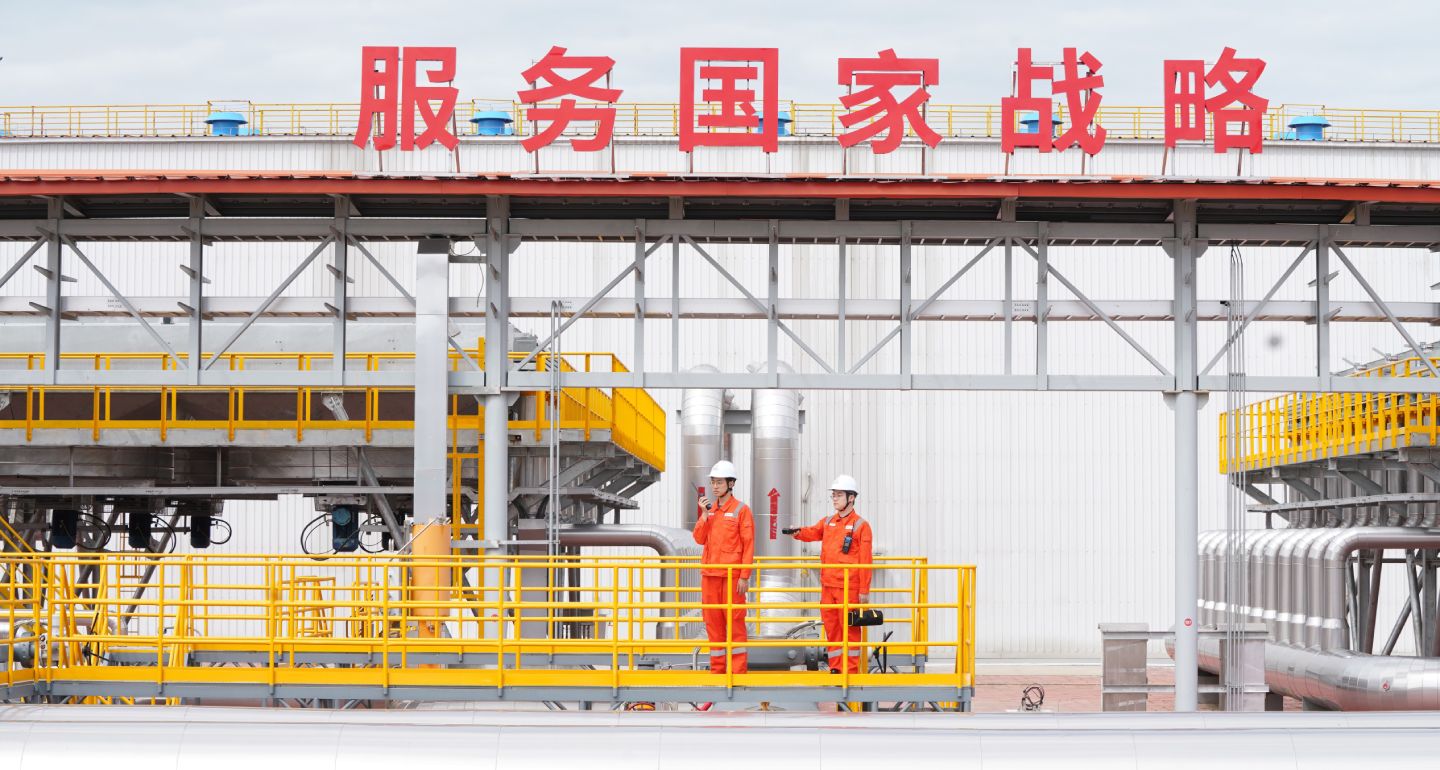
A leak of Russian gas price data helps establish that China is paying Russia far less than Central Asian countries and Gazprom’s former European customers.
A 2023 article by this author about the price of Russian gas sold to China via the Power of Siberia pipeline was published amid debates over whether the Chinese market could replace the European market for Russian gas exports. There are no official figures for what Beijing pays for its Russian gas, but for a couple of years, Chinese customs data made it possible to calculate the price, model the formula used for the price’s calculation, and compare this to what China pays for Central Asian gas. These calculations show that China pays far less for Russian gas than what European countries paid in the 2010s. The price is also lower than what it pays for gas from Uzbekistan and Turkmenistan (even though China is their sole customer).
Of course, the comparison with Europe is purely theoretical. Even without the war in Ukraine and Western sanctions, it would be impossible to export gas from east Siberia’s Kovykta and Chayanda fields to Europe. China is the only plausible market for that gas.
One of the limitations of my previous article was the relatively short time period covered by the analysis. However, a data leak from Russia’s Economic Development Ministry means it’s now possible to re-examine and refine the conclusions. The leak occurred when the ministry published an addendum to a socioeconomic forecast that accidentally included a table with the price and quantity of pipeline gas sold to China in 2022, 2023, and 2024.
My previous analysis was based solely on data from 2020 and 2021. One of the conclusions of that analysis was that the formula used to calculate the price China paid for gas was revised every quarter. In simplified terms, the formula to calculate, for example, the price in the fourth quarter would be: GP = 2.5 x OP + 20 (where GP is the price for a thousand cubic meters of gas and OP is the average price of a barrel of Brent oil in the first and second quarter). This is the so-called 6-3-3 formula in which the average indicator over six months with a three-month lag determines the price for the next three months.
In my original article, I noted that the formula likely included the price of crude oil and oil products. However, for a long time the price of oil products was closely correlated to that of crude oil, so one can simply use the price of crude for an approximate calculation (naturally, applying an appropriate coefficient).
A lot more data has appeared recently (for example, it’s now possible to track the increases in Russian gas shipments to China, and how prices from different suppliers have changed)—and this increases the accuracy of the analysis. The market situation has also evolved, with the price of crude and oil products diverging more frequently. All of this makes it possible to be more precise when determining the formula.
The enhanced analysis in this article mostly confirms the conclusions I drew three years ago: The prices I calculated up to spring 2026 were no more than 15 percent different from the real ones. My conclusions about price dynamics were also confirmed. At the same time, the difference between what China pays for Russian and Turkmen gas (following a formula adjustment after 2023) was not as significant as in the preceding eight years.
After the full-scale invasion in 2022, China’s customs service stopped publishing data on the size of Russian gas shipments (though they continued to publish the monetary value of imports). One reason for this was to hide the price. Nevertheless, there are occasional media reports about how much gas is being exported to China from particular countries, over particular periods. Combining these two data sets makes it possible to assess how close the numbers provided by the estimated price formulas are to reality. It’s important to remember that China registers imports with a time lag of a month (for example, the record of gas imports from August relates to payments and volumes from July).
Ultimately, the price for Russian gas deliveries (in thousands of cubic meters) is 0.256(gasoil price) + 0.142(high sulfur fuel oil price). To determine, for example, the gas price in the fourth quarter based on my refined formula, the prices for oil products are based on Rotterdam quotations per metric ton averaged over the first three quarters of the year (with no time lag). If, for simplicity’s sake, we wanted to use the Brent oil price, then for each quarter, we would need to use the formula: gas price = 3.15 x oil price. The “oil price” refers to the average price for Brent crude over the previous three quarters.
In addition, by using data from 2015 through 2021, we can ascertain the price formulas used for shipments from Central Asia. These formulas were verified by checking them with Chinese customs data for gas payment and occasional media reports about supply volumes.
The availability of Chinese customs data about gas payments makes it possible to calculate how much gas countries are delivering to China:
Using this methodology suggests that Gazprom delivered 39.4 billion cubic meters of gas to China in 2025 (the company said that it supplied 38.8 billion cubic meters). If the pace of delivery from the first seven months of 2026 is sustained through December, the annual volume could hit 40.5 billion cubic meters.
Comparing China’s gas contracts with Russia and Turkmenistan yields some surprises:
Generally speaking, Russia secured significantly worse terms from China than Turkmenistan, getting between $40 and $60 less per thousand cubic meters. While the shape of the price curve for both countries is similar, the price for Turkmenistan includes compensation for the cost of transporting gas via an 1,800-kilometer pipeline through Uzbekistan and Kazakhstan. In addition, Turkmen gas arrives in the far west of China, about 3,000 kilometers from Beijing and a long way from consumption centers. Russian gas, on the other hand, enters China near Heihe, which is half the distance to Beijing.
Admittedly, in periods when the price of diesel rises faster than other benchmarks, the Russian pricing formula—which is heavily pegged to gasoil—proves more advantageous than the Turkmen one. This is what happened in 2022–2023, and in 2026.
Finally, it’s also possible to assess how the price specified in Russia’s contract with China compares to the Turkmenistan contract and Gazprom’s European contracts (both the traditional formula that was used until 2009 and the dynamic pricing that Russian companies adopted after the Europeans challenged the old pricing mechanism).
Given that this analysis covers almost a quarter of a century, all the prices are given in their 2026 U.S. dollar equivalent:
The formula-based prices for gas in the Power of Siberia contracts with China and Gazprom’s contracts with Europe dating from the Soviet period are both based on the hypothetical assumption they were in effect from 2004 to 2026. For many years, Hungary and Italy did publish data on the price of imported Russian gas. And in the periods when those prices could be compared with the prices in neighboring countries, they were similar. Despite the wide range of prices and market conditions over the past twenty-five years, it’s evident that Russia sold gas to China for as much as 30 percent less than it did to Western Europe.
It’s harder to make the comparison after 2011, when prices were more volatile—particularly if we include the period of exceptionally high prices between 2021 and 2023. Between 2011 and 2019, the pricing formula for China generated 18 percent less for Russia than the price at which gas was sold to Hungary. And from mid-2021 to mid-2023 during Europe’s gas market frenzy, the price of deliveries to China was as much as 77 percent lower.
Examining the long-term trends of pricing mechanisms leads to several interesting conclusions. First, while Gazprom viewed reforms of the European gas market after 2011 as a violation of contractual agreements and a unilateral imposition, after 2020 the dynamic pricing model was far more profitable. Second, using a formula-based pricing system was acceptable to China because gas imports are not a competitive market (in each instance, there is only one buyer and one supplier). As a result, a link to some form of independently determined price was all but inevitable.
Significantly, Beijing was able to negotiate far more advantageous terms than Gazprom’s old European customers, even though the final Power of Siberia agreement was only signed in May 2014 (when Russia was far less isolated than it is today). Moreover, this difference would have continued despite high oil prices. This disproves the theory that Russian negotiators agreed to the deal because they held the mistaken belief that oil prices would continue to rise.
It’s much harder for Russian negotiators today. On the one hand, the growing confrontation between the United States and China, and the instability in the Middle East, should push China into reducing LNG imports in favor of pipeline gas—which would likely be to Moscow’s advantage. On the other hand, the break with Europe has left Gazprom with huge gas reserves in Siberia’s Yamal Peninsula that are ready to be exploited, but have no customers—significantly strengthening China’s position.
Finally, China is only too aware of the price Russia agreed for supplying gas through the Power of Siberia pipeline. If Moscow agreed to such terms back then, why should Beijing offer better ones now when Russia is far more internationally isolated? The 2014 terms are likely the best Gazprom can hope for when it comes to any new gas contracts with China.

Senior Fellow, Carnegie Russia Eurasia Center
Sergey Vakulenko is a senior fellow at the Carnegie Russia Eurasia Center.
Recent Work
Sergey Vakulenko
Sergey Vakulenko
Carnegie does not take institutional positions on public policy issues; the views represented herein are those of the author(s) and do not necessarily reflect the views of Carnegie, its staff, or its trustees.
Japan’s long-term security policy is driven by concerns about China, and there is little appetite for (or interest in) pursuing a confrontation with Moscow.

James D.J. Brown

The truth of the strategic situation is that Europe and Russia are extremely unlikely to be able to “turn the page” on their confrontation within the next two decades.

Arkady Moshes

Russia spent years building a “sovereign internet,” concentrating web infrastructure exclusively within Russian territory. Ukrainian drone attacks have shown how vulnerable that approach has left the Russian internet.

Maria Kolomychenko
Putin’s conservative staffing policies and search for ever greater control have cemented parliament’s transformation into a bureaucratic appendage of the executive branch.

Andrey Pertsev

Russia’s AI-driven propaganda campaigns operate in a fragmented, chaotic, and often illogical manner. That’s not necessarily a problem for the Kremlin, though: It’s much easier to mimic genuine public debate that way.

Ilya Klishin