

Commentary
Maria Kolomychenko
{
  "authors": [
    "Maria Kolomychenko"
  ],
  "type": "commentary",
  "blog": "Carnegie Politika",
  "centerAffiliationAll": "",
  "centers": [
    "Carnegie Endowment for International Peace",
    "Carnegie Russia Eurasia Center"
  ],
  "englishNewsletterAll": "",
  "nonEnglishNewsletterAll": "",
  "primaryCenter": "Carnegie Russia Eurasia Center",
  "programAffiliation": "",
  "regions": [
    "Russia"
  ],
  "topics": [
    "Technology",
    "Domestic Politics"
  ]
}
Source: Getty
While France and Australia are seeking to establish the legal obligations of messaging apps like Telegram, Russia wants total subordination.
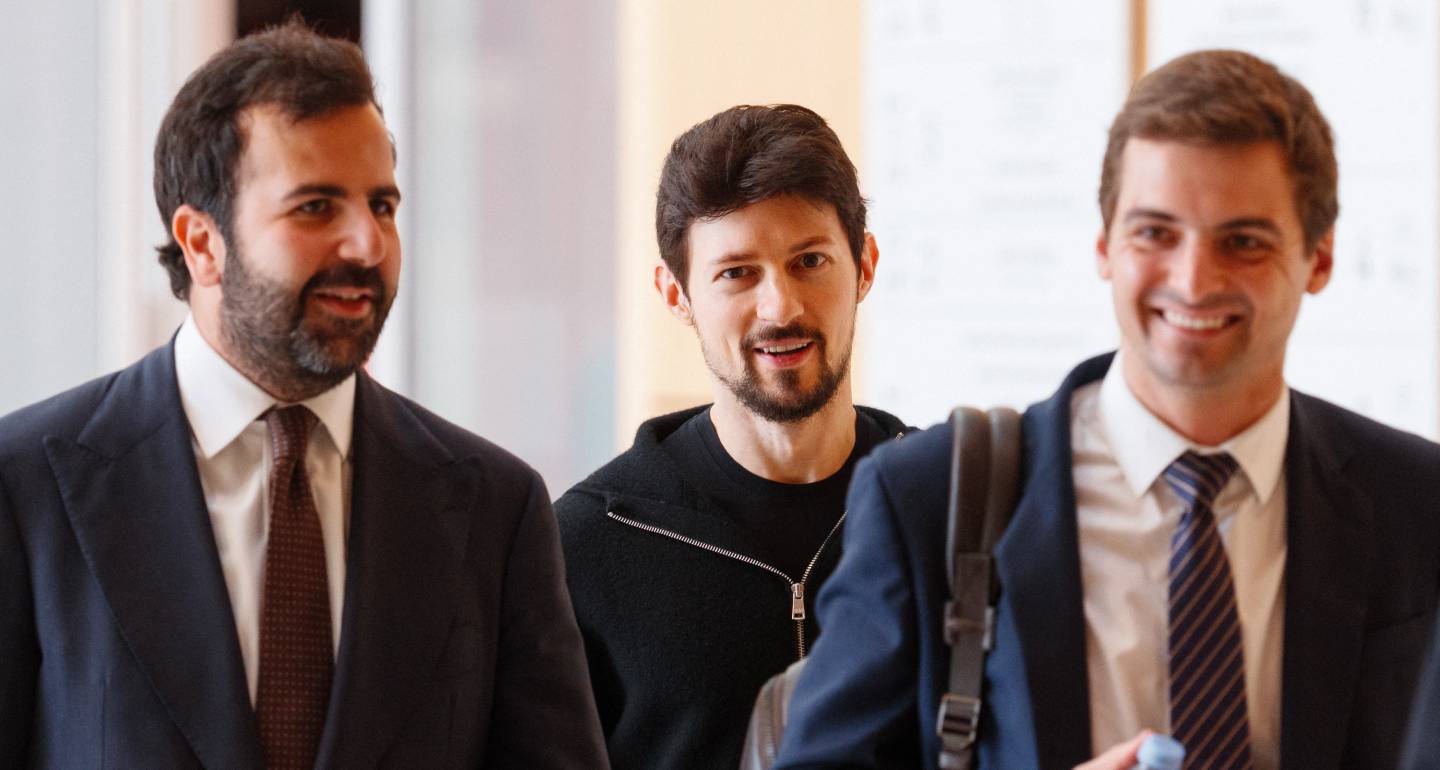
Pavel Durov, the Russia-born founder of the messaging app Telegram, is one of the world’s most wanted people. He was detained at a Paris airport in 2024. Then, in July 2026, Russia put Durov on its international wanted list. The same month, Australia’s eSafety Commissioner said Telegram was in violation of the country’s online safety laws.
While the allegations against Durov appear similar—with Russia, France, and Australia all apparently upset about Telegram’s failure to remove content linked to terrorism, fraud, money laundering, and child pornography—they are actually very different. If Australia and France want to determine the liabilities of digital platforms, Russia wants total control of Telegram.
The Russian authorities have repeatedly changed their position on Telegram over the course of nearly a decade. There is abundant evidence that the formal charges leveled by Russia’s security agencies have little in common with the Kremlin’s real goals.
Russia’s contradictory approach to Telegram was already in evidence back in 2017, when, following the adoption of repressive legislation known as the Yarovaya Law, Russia’s internet watchdog and censor Roskomnadzor demanded that Telegram be added to a register of those “organizing the dissemination of information.” That would have required Durov to share user correspondence with the security services: something to which he refused to agree.
The head of Roskomnadzor, Alexander Zharov, subsequently promised Durov and the general public that inclusion on the register would only be a formality. “This does not mean that there will be access to the messages of users,” he said. Following his assurances, Durov allowed Telegram to be added to the register. Less than two months later, the Federal Security Service (FSB) demanded that Telegram give it the information needed to decode user messages—in other words, exactly what Zharov had said they wouldn’t ask for.
When the dispute reached the courts, the government had changed its story once again. The FSB claimed it had only requested access to the correspondence of people suspected of involvement in a deadly terrorist attack in the St. Petersburg metro. But the FSB’s demands published by Durov were significantly broader and concerned the ability to decode Telegram messages in general.
Unable to get what it wanted from Telegram via the courts, Roskomnadzor launched an infamously botched attempt to block Telegram in 2018. It did not succeed, though it inadvertently blocked plenty of other websites in the process.
Eventually, the authorities gave up, saying that Durov had shown “willingness to combat terrorism and extremism.” While there were rumors that Durov had done a deal with the Kremlin to end the standoff, no evidence ever emerged that the FSB had received access to Telegram user correspondence.
After the full-scale invasion of Ukraine in 2022 and subsequent ban on Western social media and independent media outlets, Telegram was—for a while—the only major source of uncensored information in Russia. Yet when Durov was detained in France, Russian officials spoke out in his defense, claiming he was the victim of a politically motivated vendetta. “It’s true terrorists use Telegram,” President Vladimir Putin’s spokesman said. “But terrorists also use cars. Why don’t they arrest the CEOs of Renault and Citroën?”
It wasn’t long before the Kremlin’s position changed again, however. As soon as Russia launched its “national messaging app” Max in 2025, the authorities did another U-turn on its main rival, Telegram. At first, officials accused Telegram of not doing enough to stop scammers and the spread of banned information. Then Russia blocked phone calls via Telegram, slowed the functionality of the app, and eventually reverted to trying to block it entirely.
That culminated in a criminal case against Durov. According to the FSB, Telegram had not done anything to stop Ukrainian spies from using the app for recruitment (a similar accusation to the one made by the French authorities that had been ridiculed by Putin’s spokesman).
Over the past decade, the Russian authorities have made wildly different demands of Telegram, repeatedly altering their arguments. The app has gone from being a national security threat to a partner in the fight against terrorism, and then back to a “hostile” platform. The only thing that hasn’t changed is the Kremlin’s desire for total control.
In comparison, the allegations against Telegram in France and Australia are more recent and more straightforward. Telegram’s problems in France began in February 2024, when prosecutors said the app was systematically ignoring court orders (between 2013 and 2024, the company apparently disregarded 2,460 such orders).
Ultimately, Telegram was investigated on twelve criminal charges that can be divided into two groups. The first group of charges was about Telegram being a platform for drug dealing, scams, money laundering, and the dissemination of banned content. The second was about its refusal to work with law enforcement.
In August 2024, Durov was detained when he flew into Paris. He spent several days in custody before officially being designated as a suspect and released on bail of 5 million euros ($5.8 million) and barred from leaving the country.
Durov himself offered a different explanation for the conflict, claiming that many of France’s legal demands had been submitted to the company with procedural violations. Notably, he did not claim that France was trying to censor Telegram or that it was seeking access to user details.
After Telegram overhauled its moderation policies and started engaging more closely with European law enforcement, France softened its position. In March 2025, Durov was allowed to leave the country on a temporary basis, and, in November, all restrictions on his movement were lifted. However, the criminal investigation continues.
The Australian case is even more straightforward. The authorities are not seeking criminal charges against Durov or other Telegram executives—instead, Australia’s eSafety Commissioner filed a case in federal court, alleging Telegram has violated local legislation by failing to remove content related to terrorism, even after receiving user complaints. Telegram has said it will fight the lawsuit, claiming that in 2026 alone it has already removed more than 150,000 channels and communities linked to terrorism.
While the French investigation may be more serious, there is a similar logic in both the Australian and French cases. The two Western countries want to establish exactly what liabilities should be shouldered by digital platforms and what obligations they have to the state. Whether these demands are justified is a question that will be answered by the courts. But the charges are clear and follow a comprehensible legal logic.
The Russian case is very different. Those charges against Durov are impossible to separate from the state’s multiyear effort to force Telegram to make concessions. Seeking to disguise its true motives for attacking Telegram, the Kremlin has shifted an argument about regulation into a personal vendetta against the company’s founder.
The differences between the Russian authorities and Telegram are far more than a debate over how to moderate content. While the West wants Telegram to be more responsible about the type of information it permits its users to share, Russia simply wants Durov to accede to the Kremlin’s every demand.

Special correspondent for The Bell
Recent Work
Maria Kolomychenko
Maria Kolomychenko
Carnegie does not take institutional positions on public policy issues; the views represented herein are those of the author(s) and do not necessarily reflect the views of Carnegie, its staff, or its trustees.

The recent uncovering of Dmitry Donskoy’s relics in the Cathedral of the Archangel is yet another attempt by the Russian Orthodox Church to help the state solve its problems. However, parroting the state’s version of Russian history leaves the Church with no message except “patriotism.”
Alexander Zanemonets

With the growth in points of friction between the great powers, organizations like the SCO will continue to play a role in the strategic adaptation of the smaller powers caught between them.

Temur Umarov
The war in Ukraine and a change in ownership led VK to neglect its commercial ventures in favor of implementing the Kremlin’s online agenda. Now it’s been sanctioned by the EU.
Maria Kolomychenko
A regime founded on force, coercion, and repression does not want its propaganda, with all its flaws of logic, omissions, and outright lies, to be competing with the most simple of all messages: Thou shalt not kill.

Leonid Bershidsky

The greater threat to Zelensky comes not from Fedorov alone, but from the convergence between the former defense minister’s political campaign and the anti-corruption investigations moving ever closer to the presidential administration.

Balázs Jarábik