

Paper
Alexandra Prokopenko
{
  "authors": [
    "Alexandra Prokopenko"
  ],
  "type": "commentary",
  "blog": "Carnegie Politika",
  "centerAffiliationAll": "",
  "centers": [
    "Carnegie Endowment for International Peace",
    "Carnegie Russia Eurasia Center"
  ],
  "englishNewsletterAll": "",
  "nonEnglishNewsletterAll": "",
  "primaryCenter": "Carnegie Russia Eurasia Center",
  "programAffiliation": "",
  "projects": [
    "The Future of Russian Power"
  ],
  "regions": [
    "Russia"
  ],
  "topics": [
    "Economy",
    "Domestic Politics",
    "Technology",
    "Security"
  ]
}

Source: Getty
A much-discussed disagreement over internet restrictions in Russia was never an existential threat for Putin: It was about elite groups protecting their interests.
For several weeks, some commentators have been proclaiming that Russian President Vladimir Putin is losing control, that his popularity is waning, and an open conflict between Russian elite groups is undermining the regime. The main indicator of the system’s instability was supposedly the unusual level of frustration over internet shutdowns in Moscow and St. Petersburg.
Insiders cited by Bloomberg suggested Putin would ease restrictions in the face of pressure from his domestic politics bloc. The Guardian’s sources disagreed, claiming Putin was doubling down because of his total reliance on the Federal Security Service (FSB).
None of this was idle fantasy. Tension within the Russian political system really did grow, but it was not an existential crisis. The conflict over internet restrictions was bureaucratic—not political. It was not a fight for freedom, nor an attempt to seize power. It was a clash between two groups of bureaucrats seeking to protect their interests, and the fall in Putin’s rating was just a weapon in this conflict.
Ultimately, Russia’s security establishment came out on top. The online restrictions have become normalized, and the FSB and the government have been tasked with working together to ensure certain key functions remain accessible. In other words, the conflict was settled without endangering the regime. The system was successfully stabilized.
Localized internet blackouts in Russia are nothing new. Regular attacks by Ukrainian drones have long led to some Russian regions experiencing irregular internet coverage as mobile internet is switched off in an attempt to hamper the drones’ navigation systems. The only new development was that they began to affect Moscow and St. Petersburg. A March internet blackout in Moscow, for example, lasted nineteen days. According to the independent media outlet The Bell, it was ordered by the FSB’s scientific and technical service, which gave mobile operators a map of base stations to close.
Unlike in the regions, the shutdowns in Moscow angered senior Russian bureaucrats—above all, officials in the presidential administration who need the internet (and the messaging app Telegram, which has also been blocked) to prepare for September parliamentary elections. These officials began using all the means at their disposal to express their frustration. Deputy Speaker of the State Duma Vladislav Davankov, who represents the New People party and is close to the Kremlin’s political managers, launched a petition opposing the shutdowns. Other so-called “in-system” political parties also expressed opposition.
There was a second group within the Kremlin that was also angry about the shutdowns: those in charge of propaganda, led by First Deputy Chief of Staff Alexei Gromov. The blackouts also made life difficult for Digital Development Minister Maksut Shadayev, who was rapidly losing the respect of IT professionals.
This was the essence of the conflict. It was not a popular revolt against censorship, nor opposition to increasing repression. It was a standoff between two groups inside the system. When the security establishment got in the way of the Kremlin’s political managers, they responded by trying to attract Putin’s attention. That involved leaks to the media, teeing up influential figures from the tech world to meet with top security officials, and—the ace up the sleeve of first deputy chief of staff Sergei Kiriyenko—Putin’s own approval rating.
Putin’s popularity has undeniably been falling as the full-scale war drags on, Ukrainian drone attacks become more frequent, the economy falters, and living standards fall. The Levada Center pollster reported the Russian leader’s rating falling from 86 percent to 79 percent, the Public Opinion Foundation from 79 percent to 73 percent, and the Kremlin-linked VTsIOM from 75 percent to as low as 65 percent. A 10 percentage point drop recorded by VTsIOM between March and April caused a particular stir.
However, interpreting this as a clear reflection of the mood among Russians would be to ignore the nature of sociology in an authoritarian state. Approval ratings in a non-democratic environment do not so much measure support as the readiness to publicly declare such support. In addition, government-affiliated sociologists in Russia do not publish the results of their surveys without approval from the Kremlin’s political managers. The appearance of information about Putin’s declining ratings should therefore be seen as a bureaucratic decision.
While there has been a genuine shift in public opinion, this is not just about internet shutdowns—and certainly does not indicate the regime is about to implode. The first signs that Putin’s support was weakening appeared in the fall of 2025, and the share of those who believe the country is moving in the right direction dropped from 71 percent (the average for 2025) to 55 percent in April 2026. First and foremost, the reasons were war fatigue and the effects of a worsening economic situation. Unhappiness over internet restrictions was secondary.
The wave of publications about Putin’s falling approval ratings in the spring, therefore, should be seen as a signal to Putin: a signal that the FSB’s aggressive online restrictions and internet shutdowns had created social tension and were threatening the regime’s ability to manage elections. And sending this signal had the desired effect.
At a meeting in April, Putin ordered the government to work with the FSB to ensure the uninterrupted operation of critical services like payment systems and public services in periods when the internet was “restricted.” The wording of the order made it clear that internet shutdowns were not reserved for emergency situations, but were now normalized.
There are no limits on the FSB’s powers to limit internet access in Russia—and no one within the regime argues that there should be. But Putin’s order, which has a deadline of July 1, creates space for an inter-agency discussion. In other words, it’s no longer the Kremlin’s problem: It has delegated it to the government.
Putin has not ended the conflict; he has institutionalized it by making it the responsibility of both Prime Minister Mikhail Mishustin and FSB head Alexander Bortnikov. This is a classic Putin move that does not resolve the issue, but merely creates a platform for its management. While the FSB retains its monopoly on decisions about internet shutdowns, the government’s formal mandate to protect critical infrastructure is a lever it can use the next time the damage from such shutdowns becomes too great.
The security establishment has prevailed, although their civilian opponents were given a not-insignificant consolation prize in the form of a delay to the introduction of payments on internet traffic using Virtual Private Networks (which are used to evade online censorship) until after September parliamentary elections.
In the final analysis, this conflict was not about internet freedom, the IT sector, or the needs of business. No one tried to appeal to broader ideas of human rights. Both sides were only interested in their operational needs. The frustration of millions of people deprived of mobile internet was just fuel for a bureaucratic struggle.

Senior Fellow, Carnegie Russia Eurasia Center
Alexandra Prokopenko is a senior fellow at the Carnegie Russia Eurasia Center.
Recent Work
Alexandra Prokopenko
Alexandra Prokopenko
Carnegie does not take institutional positions on public policy issues; the views represented herein are those of the author(s) and do not necessarily reflect the views of Carnegie, its staff, or its trustees.
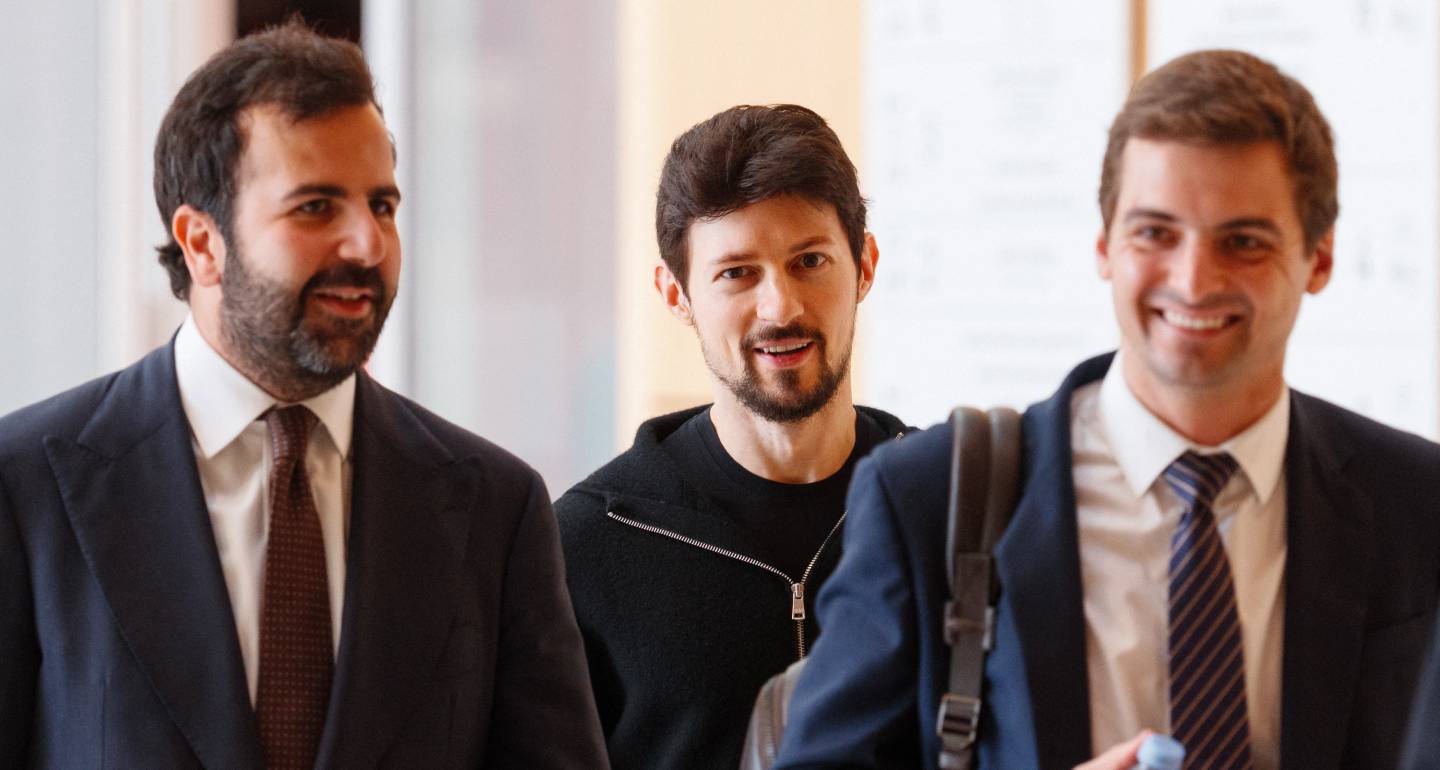
While France and Australia are seeking to establish the legal obligations of messaging apps like Telegram, Russia wants total subordination.

Maria Kolomychenko
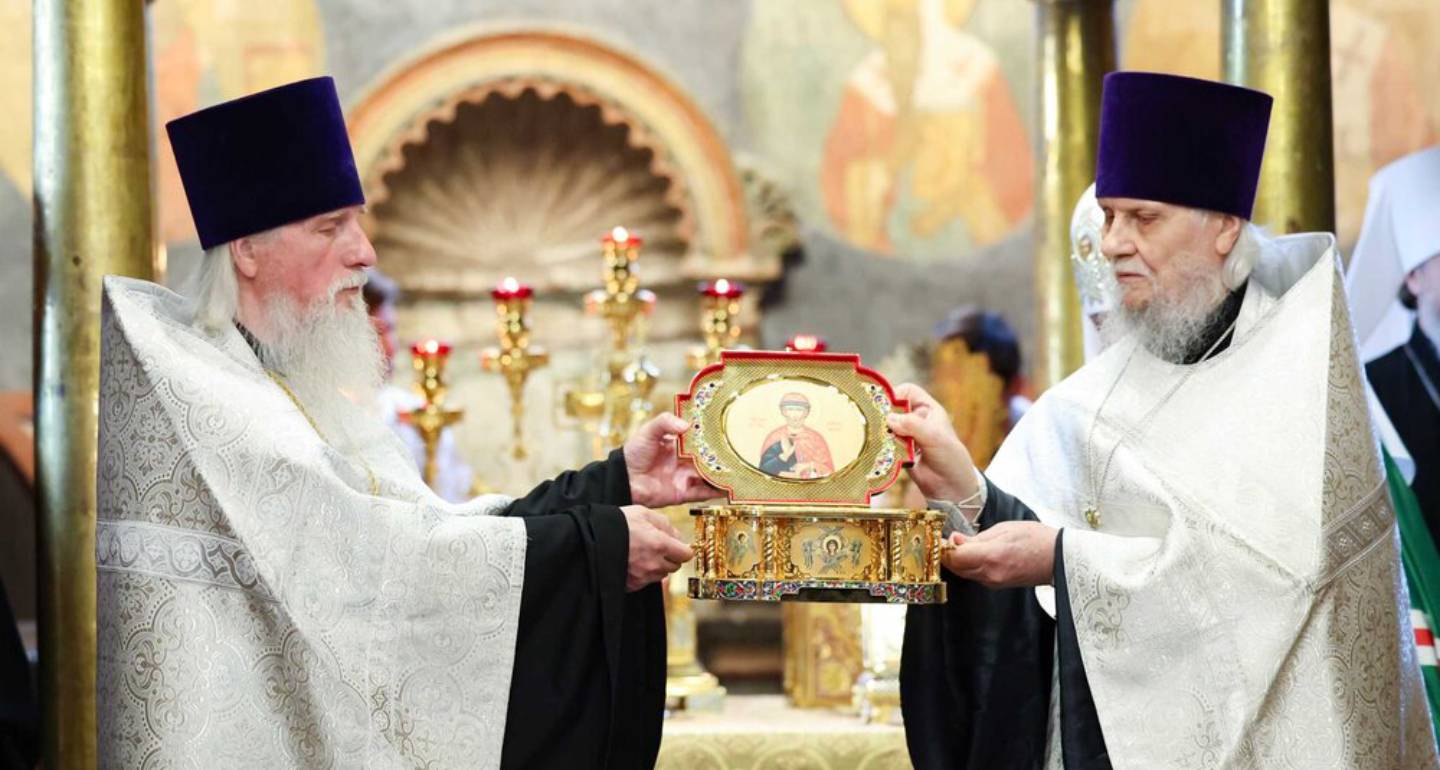
The recent uncovering of Dmitry Donskoy’s relics in the Cathedral of the Archangel is yet another attempt by the Russian Orthodox Church to help the state solve its problems. However, parroting the state’s version of Russian history leaves the Church with no message except “patriotism.”
Alexander Zanemonets

The war in Ukraine and a change in ownership led VK to neglect its commercial ventures in favor of implementing the Kremlin’s online agenda. Now it’s been sanctioned by the EU.
Maria Kolomychenko
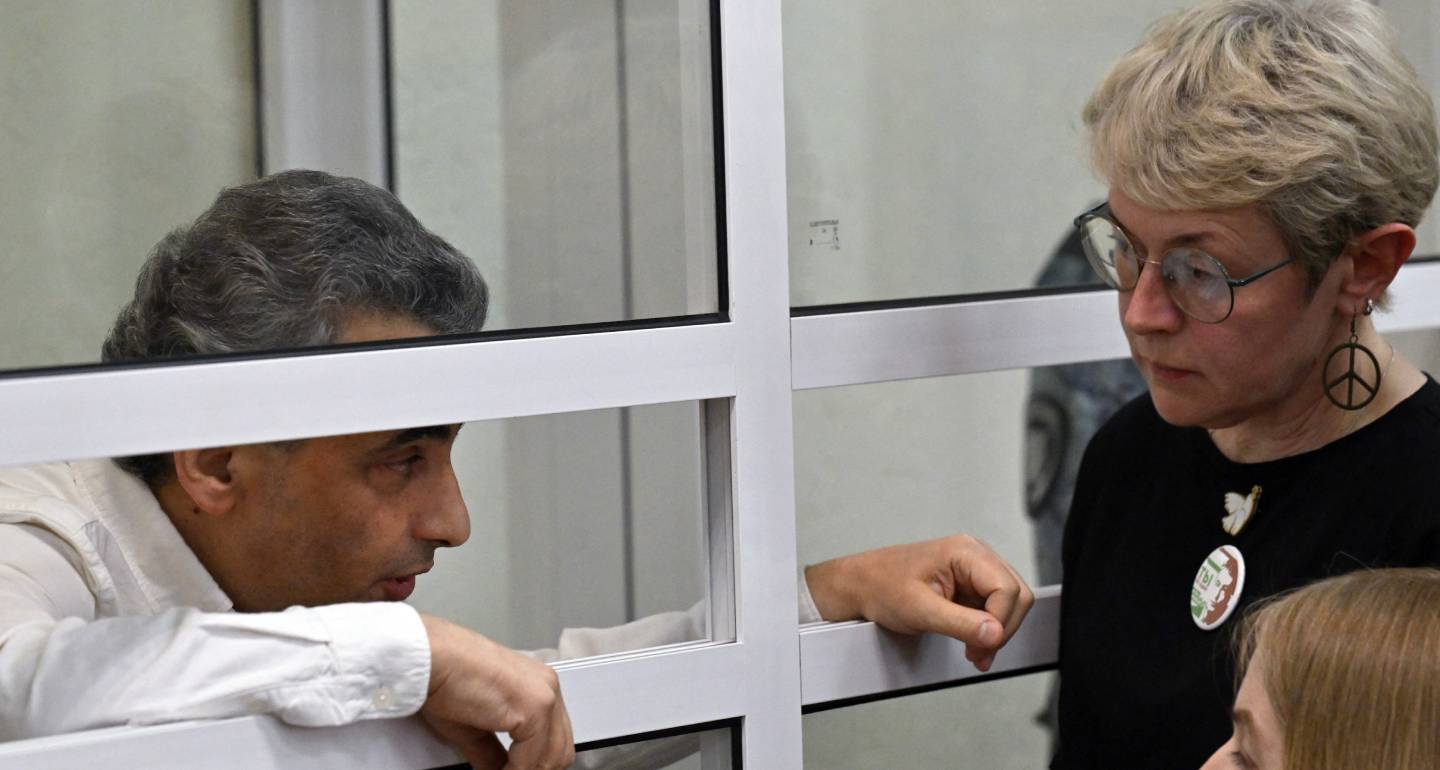
A regime founded on force, coercion, and repression does not want its propaganda, with all its flaws of logic, omissions, and outright lies, to be competing with the most simple of all messages: Thou shalt not kill.

Leonid Bershidsky
The greater threat to Zelensky comes not from Fedorov alone, but from the convergence between the former defense minister’s political campaign and the anti-corruption investigations moving ever closer to the presidential administration.

Balázs Jarábik